
Getting Started
Whether you’re teaching in an early childhood center, religious school, or Jewish day school, K’ilu experiences offer playful ways to bring Torah and Jewish holidays to life with your learners. Through storytelling, imagination, movement, music, and sensory exploration, children encounter Jewish stories as worlds to explore and make meaning from together.
Educators don’t need extensive storytelling or theater experience to begin. With simple tools and a little preparation, you can become the storyteller and Adventure Guide, transforming your classroom into a theatrical learning space where children can step inside the story—k’ilu, as if they were there.
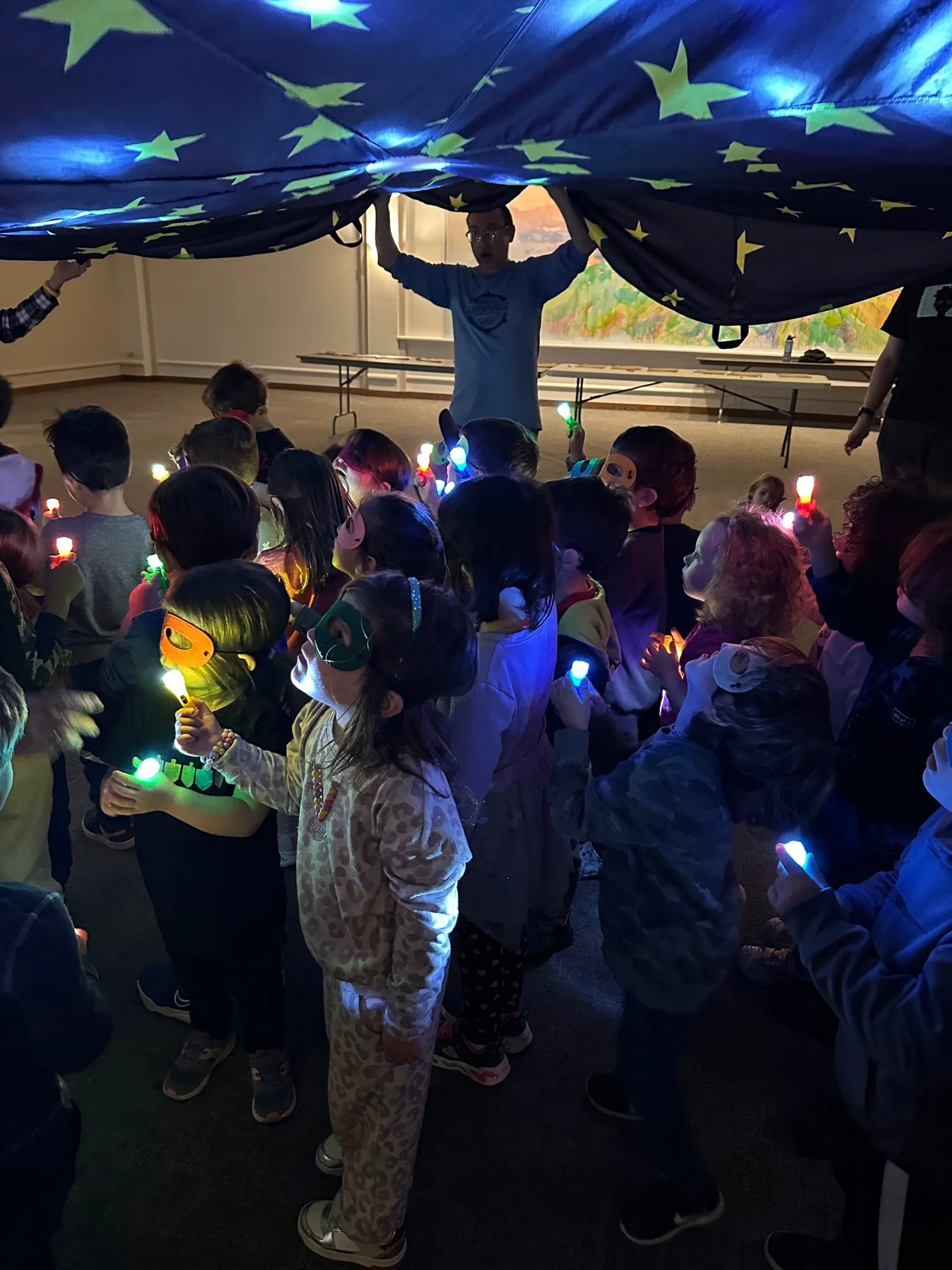
1. Choose Your Experience
Choose the experience that best fits your learners’ age, the story or holiday you’re exploring, and the style of storytelling you want to bring into your classroom.
2. Preview the Story Tools
Read through the experience guide and listen to the audio before you lead it with your learners. You don’t need to memorize anything—just get a feel for the story, its rhythm, and the moments you’ll be creating together.
3. Gather Your Materials
Each experience includes a list of suggested props and materials. Most K’ilu experiences use simple, flexible materials that can transform through imagination and play. Use our suggested materials or gather your own.
4. Prepare Your Space
Think about how children will move through the experience. Make room to travel, gather close, sit together, or explore sensory materials depending on the story.
5. Get Ready to Play
When the experience begins, step inside the story alongside your learners. Model the play, react to what you hear and discover, and invite children to join you. You don’t need to perform—stay present and let the experience unfold together.
6. Follow Your Learners
Every group will experience the story differently. Linger when curiosity appears, repeat favorite moments, and make room for children’s ideas and discoveries.