
K'ilu Immersive Storytelling Guide
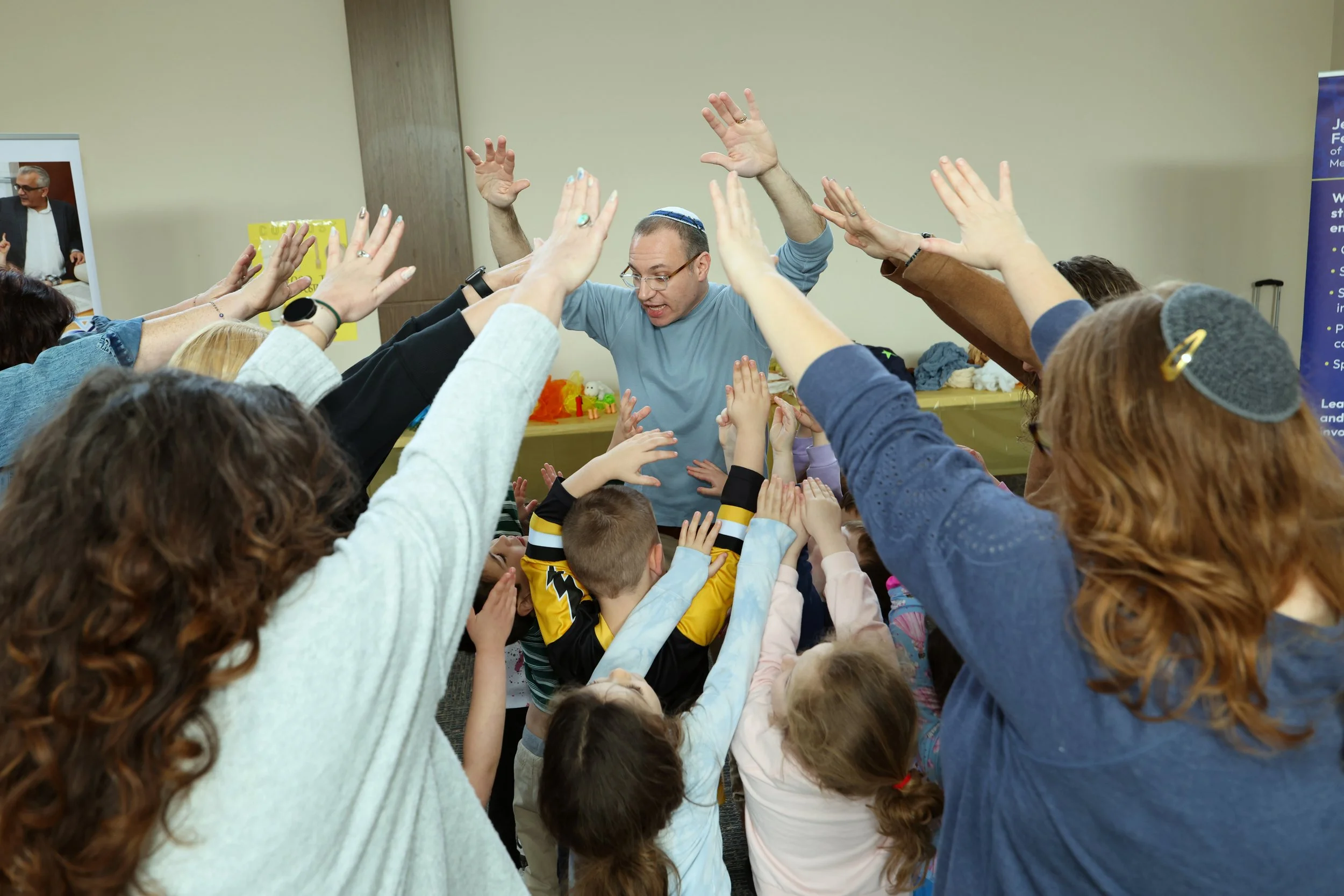
What is Immersive Storytelling?
Immersive storytelling invites children to step inside a Jewish story rather than simply listen to it. Together, they climb mountains, cross deserts, build tents, and encounter characters through movement, imagination, and play. Rather than watching or listening to a story, children become active participants in the adventure, experiencing Jewish tradition k'ilu—as if they were there.
Your Role
You are not playing a character—you are an Adventure Guide. The soundtrack provides the mood and tone; your role is to guide children through the story with curiosity, movement, and wonder. Rather than telling children what happened, you invite them to discover each moment alongside you.
Creating a Story World
Every K'ilu Immersive Storytelling Experience combines four simple elements to transform your classroom into the world of the story.
Immersive Audio carries the story forward, creating the atmosphere and emotional arc of the adventure.
Embodied Play transforms children into active participants. As they climb mountains, cross rivers, become camels, build tents, or part the sea with their bodies, they experience the story rather than simply hear it.
Curated Storytelling Props create moments of wonder and focus. A tiny cup of oil, a floating basket, a dove emerging from the ark, or miniature feet traveling across a landscape invite children to notice and engage with the story in new ways.
The Environment becomes part of the storytelling. A bed sheet becomes a tent, a parachute becomes the sea, a flashlight becomes a burning bush, and the classroom transforms into ancient Jerusalem, Egypt, or the wilderness through imagination and play.
Together, immersive audio, movement, simple materials, and theatrical imagination create a story world that children can step inside k'ilu—as if they were there.
Facilitation Tools for Immersive Storytelling
Lead the Adventure
Guide children through the story as though they are experiencing it alongside you. Instead of saying, "A long time ago…," invite them into the world with language like, "Listen… Do you hear that?", "Come with me", or "Look… what's that?" Model each action as you invite children to join you. Your curiosity, movement, and enthusiasm give children permission to imagine.
Build the Story with Your Bodies
Transform the room together through embodied play. Become trees in a forest, waves in the sea, mountain peaks, camels, sheep, or the branches of a menorah. Children make meaning and build deeper connections when they experience the story with their whole bodies.
Guide the Group
Your movement shapes the adventure. Lead children from place to place, gather everyone close before an important discovery, lower your voice to draw their attention, freeze when something unexpected happens, or pause together in silence. These simple storytelling strategies help build focus, anticipation, and shared excitement.
Create Moments of Wonder
Simple props become extraordinary when they are introduced with intention. A tiny cup of oil, a dove emerging from the ark, or a basket floating down the Nile can become unforgettable moments of wonder. Reveal props slowly, react with genuine curiosity, and give children time to notice before inviting them to engage.
Play with Scale
Shift between large, embodied play and miniature storytelling to help children experience the story from different perspectives. Tiny feet can travel across a mountain, a miniature ark can drift across the water, and a small puppet can capture everyone's attention. Moving between life-size and miniature storytelling creates contrast, invites close observation, and helps children imagine the story on a different scale.
Less Performance. More Play.
You don't need to memorize a script or perform every character. Stay present and focus on guiding the adventure. Your role is to create opportunities for children to imagine, explore, and discover together.
Follow the Children
Every group tells the story differently. Pause when wonder appears, repeat favorite moments, and follow children's ideas. The goal isn't to perform a perfect story—it's to create a shared adventure that children will remember long after the story ends.