
K'ilu Sensory Storytelling Guide
What is Sensory Storytelling?
Infants and toddlers experience stories through their senses long before they can follow a beginning, middle, and end. They notice light dancing across the room, the feeling of gentle rain on their hands, the sound of birds singing, or the movement of a floating scarf. In K'ilu Sensory Storytelling, children don't simply hear a Jewish story—they discover it through sound, movement, light, simple materials, and gentle interaction. Each experience focuses on just a few meaningful moments, creating space for curiosity, connection, and wonder.
Your Role
You don't need to perform or narrate the story. Lean into non-verbal communication. Your role is to create an environment where children can discover the story for themselves. Move slowly. Wonder aloud. Follow children's curiosity rather than directing it. Sometimes a shared smile, a moment of eye contact, or quietly watching a prop together is more meaningful than using words.
Creating a Sensory World
Every K'ilu Sensory Story Experience combines three simple elements to transform the classroom into the world of the story.
The Immersive Audio Soundscape creates the environment. Rather than telling children what they are hearing, invite them to pause, listen, and discover the world through the soundtrack.
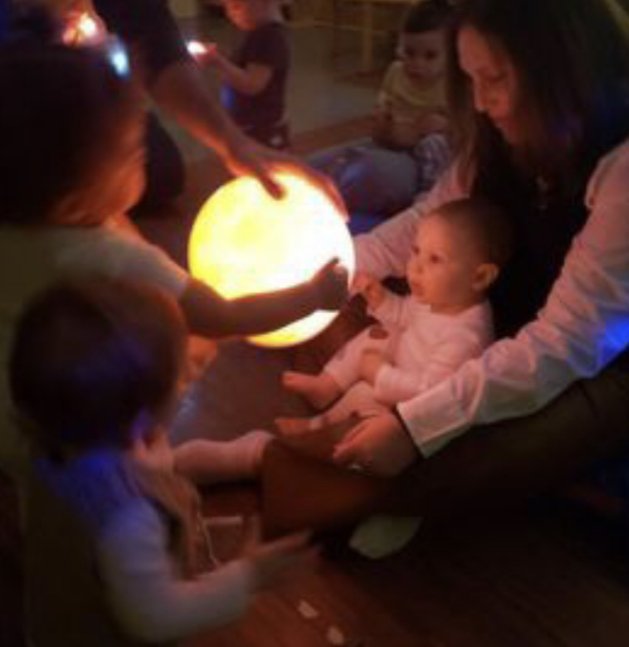
Light draws children's attention and creates moments of wonder. A flashlight, mirror ball, or softly lit prop can transform an ordinary room into a nighttime sky, a glowing rainbow, or the warmth of Shabbat candles.
Curated Sensory Props become the child's way into the story. Whether it's gentle mist from a spray bottle, a floating scarf, or soft grass growing from the earth, each prop is chosen to invite exploration, curiosity, and connection.
Together, sound, light, and simple materials create an immersive environment where children can discover Jewish stories through their senses.
Facilitation Tools for Sensory Storytelling
Surprise & Reveal
Curiosity begins before a child even touches a prop. Rather than placing materials in front of children right away, reveal them slowly. Hide a scarf behind your back, tuck a flashlight beneath a cloth, or let a cloud peek out from a basket. Giving children time to notice and anticipate the object makes the discovery itself part of the story.
Awe & Wonder
Children often look to trusted adults to understand how to respond to something new. Before inviting them to explore, experience the prop yourself. Watch it closely. Smile. Whisper "Wow..." or simply pause in amazement. Your genuine curiosity invites theirs.
Focus
Slow movement helps children notice, track, and engage. Instead of waving a prop quickly through the room, move it with intention. Pause often. Let a rainbow scarf drift through the air or a tiny light travel slowly across the room. Giving your focus to the object helps transform it from something ordinary into something magical.
Invitation
Model the play before inviting children to join. Explore the prop yourself first, then offer a simple non-verbal invitation for the child to join you. Some children will participate immediately, while others may simply watch before joining. Both are meaningful ways of engaging.
One-to-One Connection
Whenever possible, provide multiple versions of the same featured prop so several educators can move throughout the room creating the same sensory moment with individual children or small groups. These quiet one-to-one interactions often become the most meaningful part of the experience, allowing every child to encounter the story through relationship, attention, and shared discovery.
Less Story. More Wonder.
The soundtrack creates the environment. The props create the invitation. Your role is to notice alongside the children rather than explain everything they are experiencing. A few thoughtful words—"Look..." "Can you hear it?…" "The rain is falling..."—leave room for children to imagine, explore, and make meaning in their own way.
Follow the Child
There is no right way to participate. Some children will reach for a prop immediately. Others will watch quietly before joining in. Some may return to the same sensory moment over and over again. Trust their curiosity. The goal isn't to finish the story—it's to create moments of connection, discovery, and wonder together.